

Dhurandhar The Revenge review: Beast mode Modi-fied
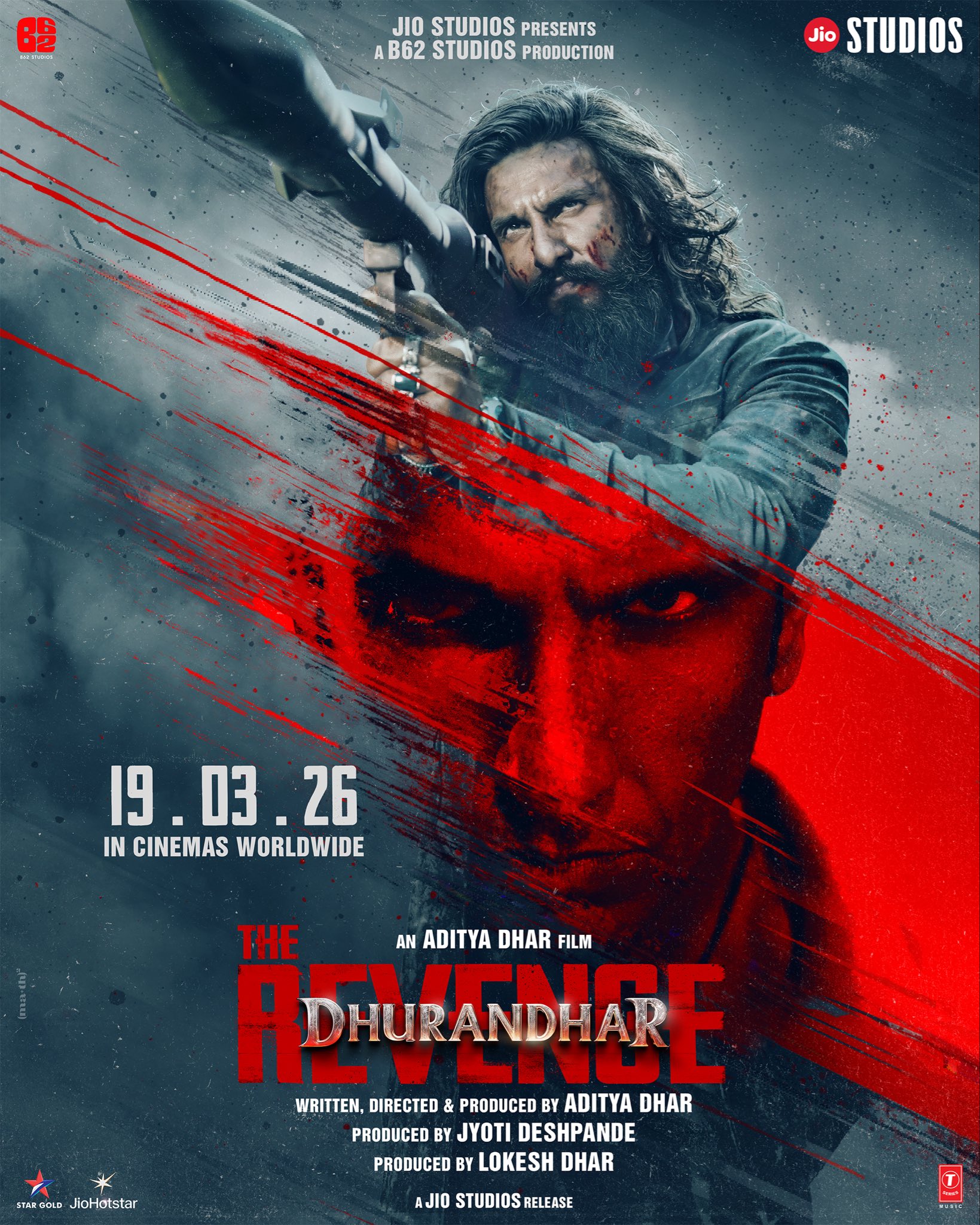
Violent, audacious, outrageous, thrilling, and politically unapologetic. Buoyed by the gigantic success of the first film, writer-director Aditya Dhar switches to a no-holds-barred narrative for the sequel, one that is likely to appease both the nationalistic audience and mandarins in Delhi
Rating:  (2 / 5)

By Mayur Lookhar
A sequel less than four months after a blockbuster first film is a delight for audiences. Writer-director-producer Aditya Dhar’s spy action thriller Dhurandhar (2025) wasn’t just a film but a lingering emotion, not just locally, but across the border. And as recently seen, it even got a thumbs up from Finnish President Alexander Stubb. For this reviewer, though, the lingering thought or question was: how to separate fact from its fiction? It nevertheless marked a new chapter in India-Pakistan information / cultural warfare.
Dhar’s Dhurandhar owes its research to journalists Aditya Raj Kaul and Dibya S., while former armyman-turned-politician Bhupinder Shahi served as the primary military consultant. Two weeks after Dhurandhar, it came to light that PERHAPS its genesis took birth from the inspiring story of unsung former J&K cop S.M. Sahai, how he succeeded in infiltrating Lashkar-e-Toiba, planting a mole called Kesar who handed over 30 SIM cards to Zaki-ur-Rehman Lakhvi, 26/11 handler. The idea was simple: whenever these SIMs were activated, the terrorists could be tracked down, foiling major attacks. While Sahai did his part, unfortunately, by the time three of these SIM cards were tracked, the horror of 26/11 had begun. This tale is said to have been chronicled in two books: RAW Secret Agents: Files of Top-Secret Missions of Indian Spies (2023) by Harsha Sharma and later Harinder Baweja’s They Will Shoot You, Madam (2025). Sahai’s story perhaps allayed theories of Dhurandhar being inspired by martyr Mohit Sharma. Though belated learning, Sahai’s intel feats subtly reminded us that Dhurandhar’s “based-on-incredibly-true-events” claim had merit. Now, even before the sequel (Dhurandhar The Revenge) arrives, Aditya Dhar made you a believer in his world of Dhurandhar.
Story
The sequel is a natural progression with Hamza Ali Mazari (Ranveer Singh) eyeing revenge. Rehman Dakait (Akshaye Khanna) was eliminated, but Mazari has to take out Major Iqbal (Arjun Rampal), Uzair Baloch (Danish Pandor), the Khanani brothers, and other targets. Just like the first film, this one too is divided into chapters. The opening one (A Burning Memory) takes us back to the early 2000s, revealing Hamza’s true identity and tragic past.

Nineteen-year-old Jaskirat Singh Rangi (Ranveer Singh) was dreaming of a career in the military, but fate dealt a cruel blow. He is sentenced to death for the brutal murder of 12 people in a family. Having lost faith in society and the system, Rangi accepts his fate until Indian intel chief Ajay Sanyal (R. Madhavan) offers him a new lease on life. The rest we’ve seen in Dhurandhar (2025).
Screenplay & Direction
From its first film’s based-on-incredibly-true-events claim, Dhurandhar: The Revenge offers a more pragmatic disclaimer: the opening line clearly states that the film is inspired by true events but is a fictional tale. The next line cautions that it isn’t a documentary and shouldn’t be taken as an accurate representation of historical or true events. (Mind you, the English disclaimer barely lasted three seconds, so we banked on the Hindi disclaimer for clarity).
As stated before, Dhurandhar (2025) felt compelling even to the strictest fact-checkers, largely due to its ‘nation first’ and ‘celebrating unknown men’ narrative. There was a tinge of political affinity, but it didn’t come at the cost of national security or honoring unknown heroes. Dhurandhar was anything but propaganda.
Four months later, regrettably, we can’t say the same about Dhurandhar: The Revenge. Hrithik Roshan was wrong in disagreeing with the politics of Dhurandhar. But if he were to say the same about Dhurandhar: The Revenge, it would be hard not to agree with him. The fictionalized heroics/politics inside Pakistan are all fine, but Dhar’s assessment of domestic politics, particularly demonetization and the ‘Naya Hindustan hai yeh’ sloganeering, perhaps shifts the focus from Unknown Men to mandarins in New Delhi. An impressive trailer had us coin the line “Badla on Beast Mode.” Now, the politics of Dhurandhar: The Revenge though feel like Beast Mode Modi-fied.

Dhar views demonetization as a powerful tool that killed Pakistan and Dawood Ibrahim’s currency terrorism overnight. Demonetization is still debated among economists, but if dismantling currency terrorism was the aim, then it hasn’t yielded 100% results yet. Citing the RBI (Reserve Bank of India), The Indian Express reported in May 2025 that there was a 37.3% surge in counterfeit Rs 500 notes in 2024-25, then a 13.9% rise in detection of counterfeit Rs 200 notes. The more worrying aspect was the combined 32.3% rise in counterfeit notes of Rs 10, Rs 20, Rs 50, and Rs 100. This begs the question: Has demonetization eradicated Pakistan-sponsored currency terrorism? Maybe it has curbed it, but like terrorism, this will continue to be a long-drawn battle. So, is there merit in celebrating demonetization on celluloid?
In the film, the architect of counterfeit notes and illegal arms from Pakistan is Atif Ahmed (Salim Sidiqui)- modeled on the late UP gangster Atiq Ahmed, who was killed in 2023 by three men posing as journalists. The dead don’t speak, and to date, you wonder if this notorious don, with over 100 cases against him, could have exposed the entire Pakistani terror designs better if he was alive. While accused of terror and fake currency links, he was never formally charged for either. Remarkably, if he was that dangerous criminal with terror links as shown in the film, why was he only jailed in 2019, that too, convicted for the kidnapping of a businessman? Before that, he won a Lok Sabha bypoll from Phulpur as Samajwadi Party MP in 2018. Maybe it’s here Aditya Dhar took creative liberties to create an Atif Ahmed.
Having infiltrated into Pakistan in the mid-2000s, Hamza Ali Mazari only find a true goal until 26/11 happened. The second film thus goes beyond 2020, a period where reports of unknown gunmen started spreading. Yes, multiple wanted terrorists were eliminated but there is also been this constant fear what if Pakistani establishment is cooking up stories? Let’s not forget this is country which even fooled the Americans during Pervez Musharraf reign, disguising innocent poor civilians as wanted terrorists and handing them over to America. Not for a moment, are we doubting the stories of Unknown men, but with Pakistan, you just never know. Remember, how once there were murmurs of Zaki-ur-Rehman Lakhvi being dead, but then some years later, a video of him, dressed in black casuals’ running on his treadmill in his swanky bungalow emerged. While the film deals with the Major Iqbals, Khanani brothers, Sajid Mirs, and even highlights Clifton’s most infamous resident’s suffering, Hafiz Saeed or Lakhvi largely remain untraceable.
It’s next to impossible for the Indian government to even acknowledge these unknown men’s stories. Isn’t it bold of Aditya Dhar then to make a Dhurandhar around it? More intriguing is the Indian-Baloch connection in taking out high-profile targets. While Indian viewers don’t care what Pakistan claims, at a time when the USCIRF (United States Commission on International Religious Freedom) report calls for targeted sanctions on RSS (Rashtriya Swayamsevak Sangh) and even our R&AW, is it prudent to gloat about Dhurandhar? Mind you, this is just a panel report, non-binding and not a US government position.
Back to the film, with the franchise travelling from 1997 to maybe 2025, we feel that Mazari has dangerously overstayed his welcome in Pakistan, especially since his cover is partly blown midway through the 229-minute screenplay. Good sleuths are those that stay off the enemy radar (something well managed in the first film), but with Mazari ascending to become King of Lyari, Dhurandhar: The Revenge begins to feel more fantasy than fiction.
Performances

Keep politics and accuracy aside, Ranveer Singh truly embodies the Sher-e-Baloch spirit of Hamza Ali Mazari in Dhurandhar: The Revenge. What makes him competent isn’t brute strength, but rage from past scars. The opening 10-15 minutes see Jaskirat Singh Rangi in beast mode, so consumed by revenge that he reigns havoc – firing relentlessly, wielding axes, hammers anything that rip through human flesh. Phew, it’s disturbing, but only a man with such rage is fit to take on the barbaric monsters of Lyari and Inter-Services Intelligence. The long hair and bearded look befit the Hamza name – lion in Arabic – and Singh roars as Hamza lays Lyari and later Muridke to fire. From a career-saving thought, Dhurandhar now reinstalls faith in Ranveer Singh as an intense actor.
It’s no secret that Akshaye Khanna walked away with the most plaudits in the first film for his masterful, intense portrayal of Rehman Dakait. Thankfully, director Dhar didn’t bow to popular demand by bringing him back. His early visual is at his funeral, later just photographs. The script didn’t warrant his presence, but there’s no denying that an artist like Khanna was missed. And that’s no disrespect to Arjun Rampal, Sanjay Dutt, or Danish Pandor. What made Khanna’s portrayal memorable was his intensity without throwing much of a fit.

No two individuals are the same, and here Aditya Dhar arms his other antagonists with a vitriolic tongue, sinister mind, and brutality. Arjun Rampal’s Major Iqbal gave a fair glimpse of it in the first film. Contrary to rumours, Major Iqbal remains the chief antagonist in Dhurandhar: The Revenge. With the wheels turning, Iqbal cuts a puzzled look until Hamza’s truth is revealed. What follows is a brutal, bloodied battle, one that runs long, accompanied by anti-India slurs. It’s Iqbal’s fractious relationship with his crippled but abusive father, Brigadier Jehangir (Suvinder Vicky), that adds a layer to his personality. For a man as dangerous as Iqbal, it feels surreal to see him shut his ears to the constant abuses hurled by his father. Comparisons with Rehman Dakait are unfair, but Rampal more than holds his own as the chief antagonist in the sequel.

For a man who got a special thanks credit in the first film, Sanjay Dutt is very much an integral part of the sequel. If the first film hailed him as a Pakistani hero, then Dhar exposes SP Aslam Khan aka Chaudhary Aslam Khan. The real Mrs. Aslam had praised Dutt, an actor admired by her late husband, and even claimed that Dutt once hailed Chaudhary Aslam as a real-life hero. Well, she sure won’t be singing his praises now. Even if this is fiction, by exposing the late Chaudhary Aslam, it’s a move to send shockwaves and make his fans in Pakistan reconsider their love for the martyred cop. This time around, like the real SP Chaudhary Aslam, Dutt doesn’t wear a bulletproof jacket. If we recall well, the film references the 2016 Uri terror attack, yet Khan, killed in 2014, is shown dying a few years after it.
Save for his brutal beheading of rival Arshad Pappu and playing football with it (a true incident), poor Danish Pandor’s Uzair Baloch is sent to Dubai and then to a Pakistani jail. Interestingly, Pakistani YouTubers claim this man was more brutal than Rehman Dakait, and one former Pakistani citizen claimed it was Uzair Baloch who helped nab Kulbhushan Jadhav from Iran. Of course, these chapters are irrelevant to Dhurandhar
Aditya Dhar takes care to ensure the Pakistani people aren’t villainised, as reflected in the open conversation between Yalina (Sara Arjun) and Hamza. But there is no leeway for Asif Ali Zardari and his PPP (Pakistan People’s Party). The ‘Mr. 10 percent’ jibes at Zargari (modelled on Zardari) needn’t be missed.
R. Madhavan’s Ajay Sanyal cuts a happier figure, both because his asset is succeeding in his mission and because he now has a free hand from the polity and bureaucracy since 2014.
Rakesh Bedi brings more than a Pakistani Punjabi sense of humour – his Jameel Jamali also surprises with grit. Bedi’s “your bataks (dove) are really white” line, meant as a pun on buttocks, to the Pakistani President will be etched in memory long after the film fades.
Music and Technical Aspects
Sashwat Sachdev’s music had an intoxicating effect, a fine mix of desi and Western tunes. You get a similar mix in the sequel, not as trendy. Aari Aari and Jaan Se Guzarte Hain reprise are refreshing, with a shoutout to Meghalaya’s young rap artist Reble.
The action is brutal and disturbing, hence the A rating. The action choreography, particularly in the riveting, bloodied climax, is worth appreciating: surely not for the faint-hearted, but to each its own.
Final Word
Dhurandhar was much loved and became the most successful Bollywood film ever. The sequel naturally started in pole position. However, the political dynamics open it to criticism. A few months ago, Arjun Rampal said critics shouldn’t impose their political ideology while reviewing a film. It’s a fair argument, but if filmmakers can align with a political ideology, why should Dhurandhar critics be singled out for pointing it out? One thought creeps in: despite exposing Pakistan and its terror designs, the Pakistani public must be lauded for appreciating Dhurandhar, in contrast to the hate some critics received back home. So, are Pakistani civilians more tolerant than our hyper-nationalists?
Having convinced us of its world with the first film, Dhurandhar: The Revenge was expected to stick to its ‘Unknown men’ or nation-first narrative. But the exaggerated emphasis on Delhi mandarins is likely to be deemed appeasement. Maybe it’s as bad a PR move as the Prime Minister’s recent visit to ‘fatherland’ Israel. Luckily for Aditya Dhar, the common man in our motherland thirsts for bloodied entertainment, and Dhurandhar: The Revenge feeds it to him exactly.
Video review to follow.