

Toy Story 5 review: A telling toy story in the age of tech
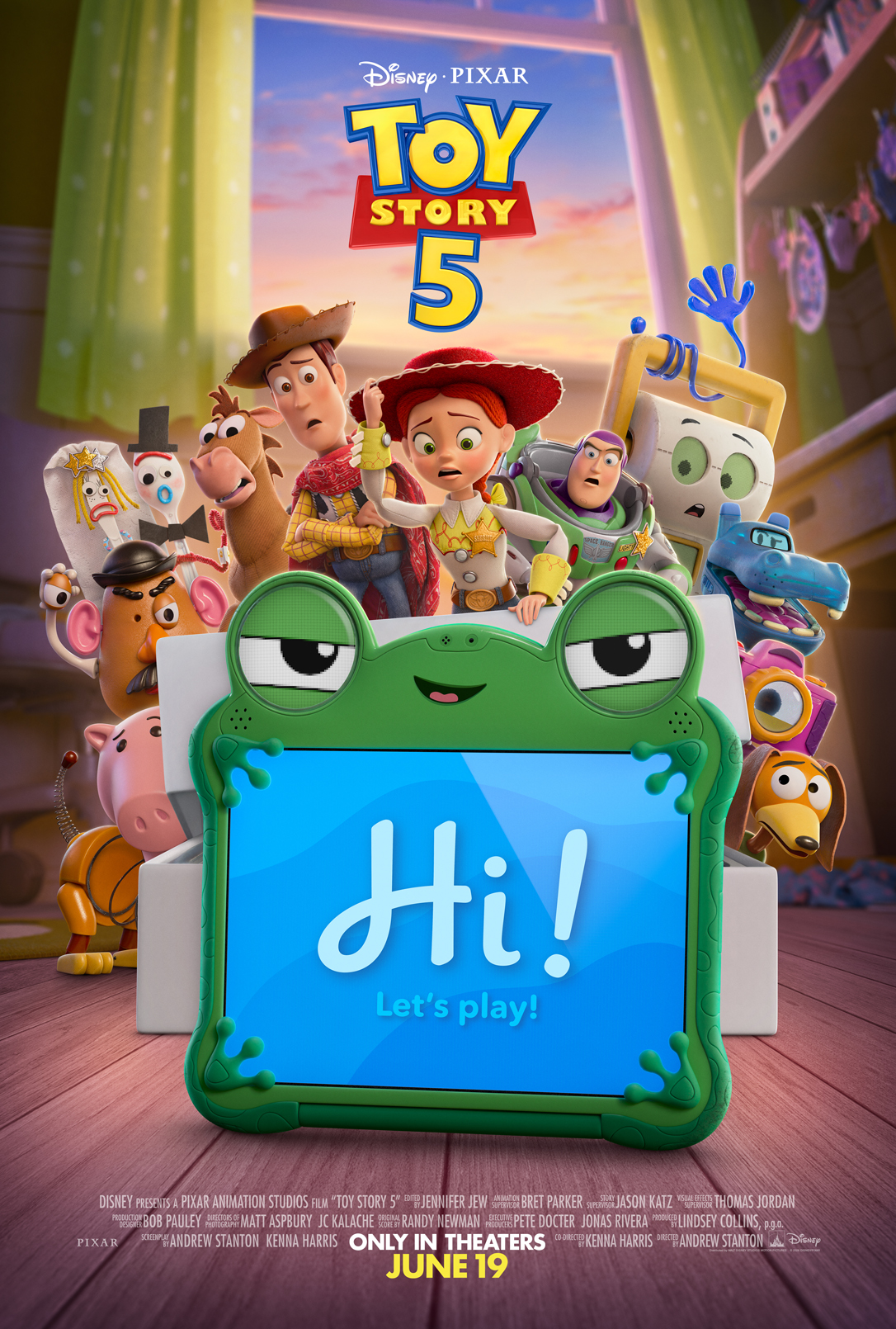
Though centered around a toy vs. tech conflict, Pixar and director Andrew Stanton’s film reminds us that there is space for all in the modern human habitat.
Rating: 
 (3.5 / 5)

By Mayur Lookhar
Toy Story 5 is the first film in the franchise without any involvement from co-creator John Lasseter. Andrew Stanton, one of the co-creators, helms his first film in the franchise and also co-writes the screenplay with Kenna Harris.
We must evolve with time to stay relevant, yet carry nostalgia within us like a compass that points back to who we were. Most creators aim to achieve this with every new film in a franchise. For Pixar, Walt Disney Studios, and Toy Story, this desire serves as the organic narrative for the fifth film.
Story

The primary story takes place two years after the events in the fourth film. Now 8 years old, Bonnie (voiced by Scarlett Spears) is keen to befriend the neighboring Jordan twins, but they are more interested in their tablets. Soon, Bonnie gets a frog-themed tablet of her own named Lilypad (voiced by Greta Lee), and she loses interest in her toys. Jessie (voiced by Joan Cusack) and the rest of the gang blame Lilypad for causing the divide. Fearing extinction and being sent away into donation boxes, Jessie feels that Lilypad must be separated from Bonnie.
Screenplay & Direction
So, what do we have here? Old vs. new? Well, we’ve seen this familiar conflict before, but this fifth film hinges more on a toy vs. tech conflict: how, in the age of tech, kids are clinging more to their devices, thus not only losing contact with their old toys but also struggling to forge real friendships in the process. Well, kids aren’t alone, because much of the tech is consumed by adults too, leaving us with a world more hooked onto tech and social media, with less socializing.
Is Toy Story 5 then some kind of diatribe against tech? Consumed by fear of becoming redundant, Jessie and the gang initially despise Lilypad, but through the course of this journey, there is an eventual realization that evolution is the way of life, and that toys and tech can co-exist in a modern human habitat. Maybe there is a subtle message here for those parents too who hyperventilate at the sight of their kid spending excessive time on tech. Andrew Stanton’s film politely urges us to embrace tech, but without losing the human connection.
A fine plot, right messaging, and it’s backed by efficient writing where the tech angle lands emotionally yet retains nostalgic bite. At 101 minutes, much of the screenplay is spent on the tech vs. toys narrative, but it’s in the final 30 minutes where the Toy Story spirit shines, adding emotional weight to the story. Toy Story 5 is perhaps the most telling tale in the age of tech.
Voice Performances

Jeez, it’s been 31 years since the first Toy Story, and these toy characters have become part of our lives. Two films came out in four years, then 11 and 9 years passed for the third and fourth films, respectively. The fifth film arrives after a gap of seven years, yet it doesn’t seem that long. Well, that is down to its quality storytelling and the voice cast. Interestingly, Tom Hanks-voiced Woody, who has been the leading character throughout the franchise, happily decides to take a backseat and let Jessie run the show in the fifth film. It wouldn’t be wrong to say that Woody chips in with just a supporting act. Albeit brief, that Tom Hanks voice is sheer magic, and Woody doesn’t hesitate to remind all that he isn’t all that old.

Joan Cusack is more than happy to take the baton from Woody, and the cowgirl Jessie navigates her way through the tumultuous ride, embarking on a journey filled with hope, despair, nostalgia, and self-doubt, but eventually finds a path forward. Though a toy, you sense that Jessie has grown both in age, beauty, and maturity.

Greta Lee steps into the franchise as the voice of Lilypad and she doesn’t disappoint. Lilypad does what she was programmed to – i.e. assist the primary user (Bonnie). Though a device, she has this cocky look about her. Along the way, though, she gauges the impact that she’s having on Bonnie. It’s here that Andrew Stanton humanises AI.

Some of the new entrants here are the lesser-noted, outdated tech like Smarty Pants – a hygiene instructor or potty-training device, brilliantly voiced by Conan O’Brien; then there’s Atlas, a cheerful talking GPS hippo toy; and Snappy, an excitable toy camera. Craig Robinson and Shelby Rabara help them come alive with their compelling tones.
Tim Allen continues his journey as the affable Buzz Lightyear, and there’s plenty of him in Toy Story 5.
A fresh film with a bunch of fresh characters, Andrew Stanton naturally had to limit the screen time for some of the resident characters. Hamm, Rex, Slinky Dog, Bo Peep, Mr. and Mrs. Potato Head might feel underutilized, but Bullseye, Forky, and Karen Beverly finally get the much-deserved attention.
Final thoughts
31 years, five films – Toy Story is a rare franchise where fatigue has not really crept in. And that is down to its adorable, humble characters, nostalgia, engaging plotlines, and no recycled franchise ideas. Importantly, though this is a franchise that has stood out for its human values, imbibed by life-like toys. Maybe there’s a Toy Story in the afterlife too.
Toy Story 5 (2026) is set to be released in theatres globally on 19th June.