

Hey Helle Lyng, hope you can attend a Bollywood Sup-Press conference
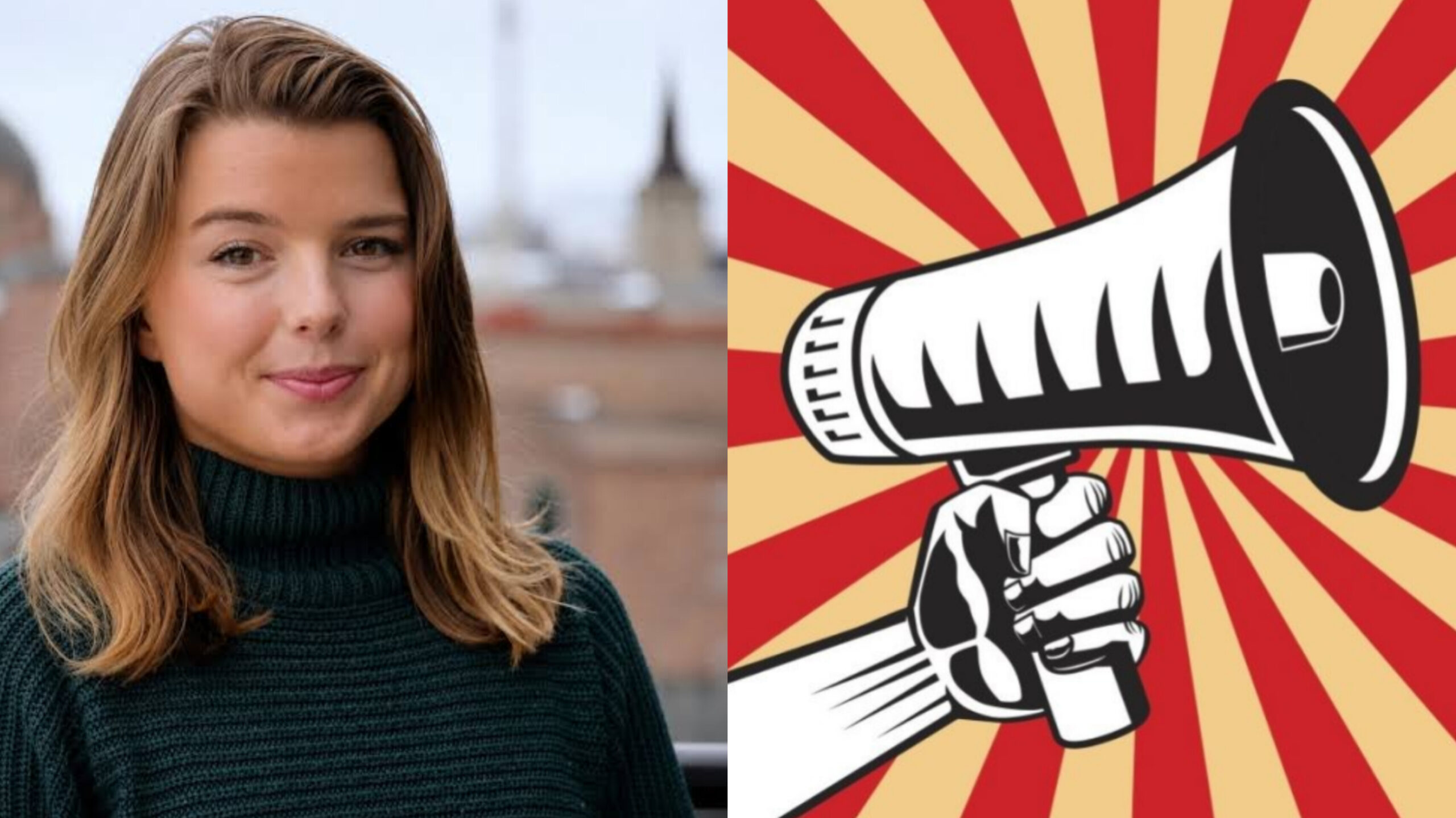
As the Norwegian journalist’s bold questions to the Indian PM, and later to Indian diplomats, spark a free speech vs. activism debate, we wonder how Norway’s free media would view the current culture of Bollywood PR.

By Mayur Lookhar
In the past, Prime Minister Narendra Modi’s foreign trips were often celebrated for their fanfare, especially the warm reception meted out by the diaspora. While NRIs continue to shower him with love, Modi has never faced such intense scrutiny from critics, both at home and now abroad.
During the recent visit to Norway, Helle Lyng, a local Norwegian journalist, sent shockwaves across India when she asked Modi, “Why don’t you take some questions from the freest press in the world?” While the PM ignored the remark and moved on, Indian diplomats later opened the floor for questions during an MEA briefing. Lyng questioned why Norway should trust India and made a general comment about human rights violations in the country.

Lyng’s bold questions have triggered a “thin line between free speech and activism” debate in India. As an entertainment portal, we are not quite qualified to comment on such matters, but as journalists and observant citizens, we wonder if Ms. Lyng could have asked more specific questions backed by data, rather than make them sound like a rant. Her leaving the press briefing room before the MEA briefing was over is bizarre. She claimed she left to get water. Leaving a press briefing before it is over – is that normal in the world’s freest media?
Well, the more concerning thing was MEA Secretary (West) Sibi George’s long, dull reply, which seemed more like whataboutery than diplomacy. From the time of Chanakya to Syed Akbaruddin, Kanwal Sibal, Nirupama Rao, and others, Bharat has produced some of the finest diplomats. Regrettably, Mr. George’s conduct was so unlike that of an Indian diplomat that it was perhaps more embarrassing than the Norwegian journalist’s bold questions. After all the furore in Indian media and on social media, Lyng has posted on X that her Instagram and Facebook accounts have been temporarily suspended, presumably due to mass reporting by aggrieved netizens back home, and perhaps also by the diaspora. She called it a small price to pay for her fearless journalism.
Well, if you had a valid reason to criticize Lyng earlier, this mass reporting/trolling only reinforces India’s poor ranking in the World Press Freedom Index, published by RSF (Reporters Without Borders). While Lyng may be oblivious to the ground realities in India, as a nation that ranks 157 out of 180 in the World Press Freedom Index, where the Chief Justice compares unemployed youth to cockroaches who later become journalists or activists, can we really lecture Lyng or Norway on free speech?
No, we can’t – but we do envy Norway’s no.1 ranking in the World Press Freedom Index report. The grass is always greener on the other side, but most Indian journalists today can only dream of Norway-like free speech. One thought did occur to us, though: how would the Helle Lyngs of Norway react to the state of entertainment media, particularly the high-handedness of Bollywood PR? Would they survive it? Would they revolt?
There are countless stories of disrespectful conduct toward entertainment reporters at Bollywood press conferences. They are called press conferences, but the press’s contribution is often controlled. Objective voices, especially independent scribes, are silenced, free speech suppressed, and often discarded. If egos are hurt, there have also been murmurs of social media witch-hunts.
Coming back to the typical Bollywood press conference, free speech is secondary; here, disparity often extends to seating as well, where hierarchy is frequently followed. Usually, seats are reserved for seniors, which is acceptable, but the definition of “senior” seems vague. There are a few veterans who truly deserve that respect, but how do you explain seats being reserved for a relatively inexperienced lot? There are some experienced professionals who may no longer be associated with noted publications, but they still carry decades of goodwill, yet they are given stepmotherly treatment. So, more than experience, is it the brand that is prioritized? Mind you, we have nothing against those relatively inexperienced journalists working for top media brands; they have earned this opportunity through talent and hard work, but it is the discrepancy in the definition of “seniors” that is hard to comprehend.
We witnessed another such example yesterday, 19 May, at the trailer launch of an upcoming Bollywood romantic drama starring a popular actor-singer, two young actors, and a veteran icon. Held in a big-screen theatre in Mumbai, the first three rows were reserved for the cast and crew, while the privileged lot were placed in the fourth row. In a rather surprising move, shutterbugs and paparazzi were placed in the sixth row. Other journalists were sandwiched between the two.
Sitting there proved to be a game of musical chairs, as some of the paparazzi urged us not to obstruct their lens. Fair point indeed, and so we changed seats within the long row to avoid inconveniencing the paps. Sometime later, a junior PR executive told us that we would have to swap rows with the paps. Attempts to explain that moving one row back would mean our mobile cameras would be out of focus fell on deaf ears. You make a logical point, and yet the junior PR executive chides, “That is rude.”
Take it up with his or her senior, and you hear, “I only asked him/her to send the message.” Any scribe worth his or her salt would stick to the ground. As expected, no such swapping of rows with the paps happened, raising questions over the event management skills.
An ideal civil society believes in a first-come, first-served philosophy. The reserved-seating culture at Bollywood events has its own hypocrisy too, where one wonders why the junior-most PR executive often tells a senior scribe to vacate the seat. We recall unpleasant scenes at a press show a few weeks ago, where a marketing executive asked a true veteran, now an independent journalist, to vacate the recliner seat.
Coming back to yesterday’s event, the rest of the trailer launch followed an all-too-familiar pattern. The chosen ones got the mics, and, save for one or two questions, the rest sounded like clichéd, PR-crafted queries. We often wonder: are artists themselves not comfortable answering out-of-syllabus questions, or are PR managers drawing the line?
Call it misfortune, but 19 May witnessed another example of PR incompetence and mismanagement. Primarily a sports event, with a touch of Bollywood, it aimed to generate positivity around a non-cricket sport in India. The bizarre seating logistics, with most of the front-row tables reserved for VIPs or franchise teams, were striking. A few reporters who attended seated themselves behind the VIP tables. One was surprised and touched by the presence of a living legend, a sporting icon, who decided to honor his commitments despite having laid his mother to rest the previous day.
Things were smooth at the beginning, but later there was a Q&A session. Sensing that there seemed to be very few reporters present, one was eager to ask a quality, objective question to the legend. But when asked for the mic, a young boy wanted us to reveal our question, and only then would he give us the mic. He claimed to be from PR. Well, it is common at some events for PR teams to ask PR-style questions themselves. Naturally, any honest and experienced journalist would decline such a ridiculous demand from PR. One feels for the legend and for the league, its owners, who, in a cricket-mad nation, are trying hard to promote a non-cricket sport, but they are not backed by the right PR and marketing.

Well, Bollywood or sports, such is the state of objective media in India. Parity and respect, well, perhaps that is too much to ask of a nation divided along caste and religious lines. For any cultural shift, change must begin at the top. Regrettably, free speech and transparency seem to be lacking there. When the establishment of the day appears to discourage free speech, can we really expect a seismic shift in the attitude of private industries like cinema? Mind you, the media itself has not helped either, because many mainstream outlets seem happy to function more like mouthpieces than free media. It would be fascinating if a Helle Lyng could attend a Bollywood press conference and comment on all the tamasha. Civility and decorum apply to all, and as a democratic, independent publication, we have always believed in free speech, but more importantly, in the principle of “give respect, get respect.” Is that too much to ask?
Video review to follow.